Summary:
- Unsealed joints, an unsiliconed perimeter, or a poorly levelled subfloor will cause even a genuinely waterproof floor to fail.
- No vinyl, hybrid wood, or engineered wood is suitable for wet bathrooms. Only tiles over a waterproofing membrane are appropriate.
- For Singapore kitchens and bathroom dry zones, LURF® vinyl and hybrid wood with HydroSeal are the recommended options.
- For yards and balconies, choose sintered stone, outdoor decking, or artificial turf. These are the only materials built for Singapore’s outdoor conditions.
For homes in Singapore, wet area flooring matters more than many homeowners realise. Waterproof and water-resistant are not the same thing, and the difference can affect how long your renovation lasts.
There is a specific warmth to stepping onto vinyl wood flooring on a cool Singapore morning that tiles simply cannot offer. It is the kind of detail that makes a home feel considered rather than just finished. The challenge is getting that warmth into the right room, because not every space can support the same material.
A common mistake is choosing flooring based on how it looks in a showroom, then installing it in a wet or wet-adjacent space. Vinyl wood flooring is often considered for these areas because it offers a warmer look than tile, but the product still needs the right waterproof construction for the room. 6 months later, homeowners may discover that “waterproof” on the packaging does not always mean waterproof in daily use.
Some floors handle splashes well but fail under standing water. Others resist moisture on the surface but allow water to creep through the joints over time, causing hidden damage before the problem becomes visible.
Is Your Floor Actually Waterproof or Just Water-Resistant?
These 2 terms are often used interchangeably in showrooms and online, but they mean very different things.
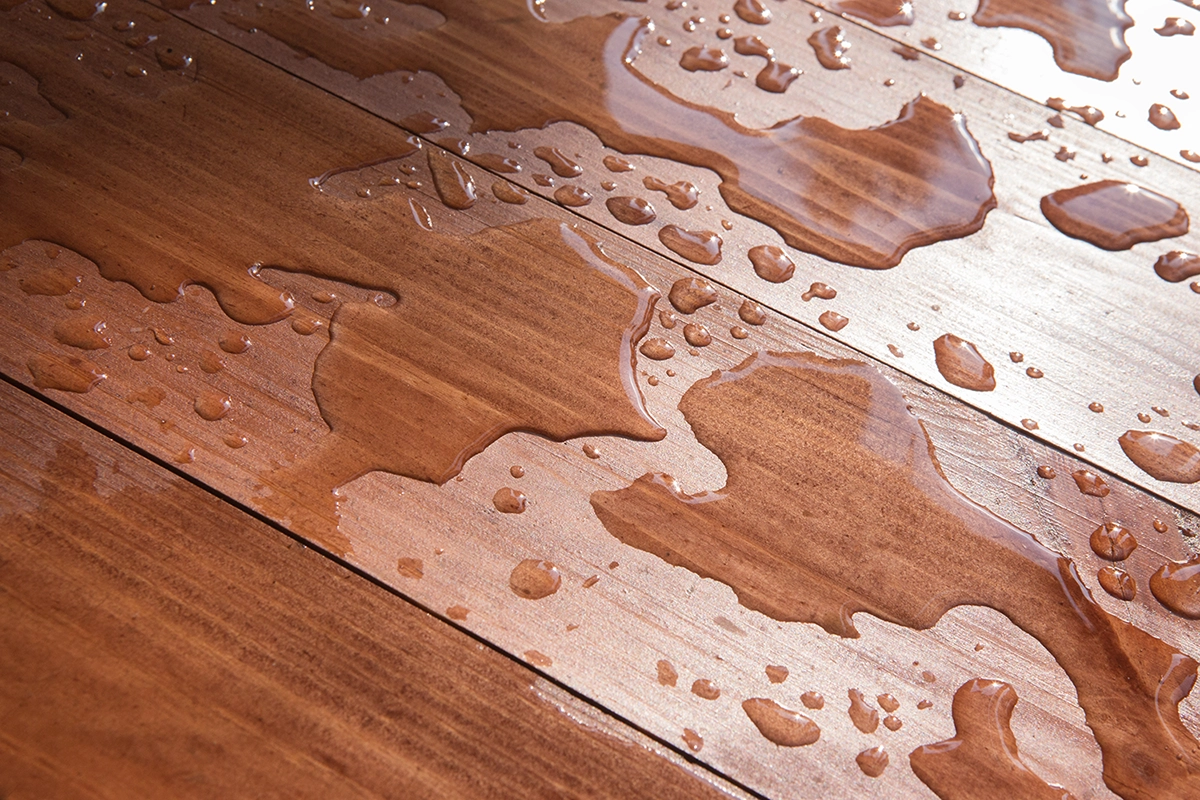
A water-resistant floor can handle brief moisture, such as a drink spill, damp mop, or condensation from an air-conditioning unit. It should not warp or swell from short contact. However, standing water, repeated exposure, or moisture pushing up through joints can still cause damage over time.
A waterproof floor is designed to resist water penetration through the surface itself. The core should not absorb moisture, expand, warp, or delaminate from water contact.
However, waterproof does not always mean the full flooring system is protected. If the joints between planks are not sealed, or water gets underneath through an unsealed edge, even a waterproof product can fail.
This matters in a tropical home, where bathrooms are often washed down, kitchens deal with daily splashes, and outdoor spaces face heavy rain. The real question is not just whether the material is waterproof. It is whether the full installation system keeps water where it belongs.
For kitchens and bathroom dry zones, LURF® vinyl and hybrid wood with HydroSeal are the 2 options that consistently meet both the waterproofing and comfort requirements of residential wet-adjacent spaces.
Your Options for Waterproof Flooring in Singapore
When choosing waterproof flooring in Singapore, homeowners usually compare 4 main options for wet and wet-adjacent areas. Each handles moisture differently, so the right choice depends on where it will be installed.
| Flooring | Waterproof Rating | Key Technology | Feel and Finish | Limitation |
| Porcelain and Ceramic Tiles | Fully waterproof when installed over a proper membrane with sealed grout joints. | Waterproofing membrane beneath, with sealed grout above. | Hard and cool underfoot, with limited acoustic comfort in most spaces. | Grout lines need regular cleaning to prevent staining and mould. |
| LURF® Vinyl | 100% waterproof rigid PVC core with fully sealed joints. | HydroSeal locking system with a phthalate-free virgin PVC core. | Warm underfoot, with up to 21 dB noise reduction and natural wood or stone designs. | Designed for indoor use only and not suitable for fully wet zones. |
| Hybrid Wood With HydroSeal | 100% waterproof surface with factory-sealed joints. | HydroSeal joints with Scratch Guard coating rated up to 10 times more scratch-resistant than standard laminate. | Carries the warmth and visual depth of real wood, making it suitable for kitchens and dry bathroom areas. | Not suitable for wet bathrooms or outdoor use. |
| Engineered Wood | Water-resistant across most ranges. The Cascada collection is 100% watertight with HydroSeal on all 4 sides. | HydroSeal coating allows water to sit on the Cascada surface for up to 72 hours without damage. | Authentic timber look and feel, with genuine wood grain and natural character. | Best kept away from areas with regular or sustained water exposure. |
Waterproof flooring looks convincing in photos. What images cannot show is how it feels underfoot, how it responds to your subfloor conditions, or whether it is the right fit for your specific wet zones. Visit Floor Xpert’s showroom to see, touch, and walk on every option before you decide.
Which Flooring Works Best in Kitchens, Bathrooms, and Outdoor Spaces?
The table above tells you what each product can and cannot handle. What it cannot tell you is how those properties translate into daily life in a Singapore home. A waterproof rating matters less than whether the product suits the specific moisture conditions, traffic, and comfort demands of each room. The table below breaks that down space by space.
| Space | Best Option | Why It Works | What to Avoid |
| Kitchen | LURF® vinyl or hybrid wood with HydroSeal | Comfortable to stand on during long cooking sessions; easy to clean without the grout maintenance that tiles demand. | Tiles are appropriate but hard underfoot for extended use. |
| Bathroom dry zone | LURF® vinyl or hybrid wood | Well-suited where water contact is incidental rather than sustained; warm underfoot stepping out of an air-conditioned bedroom. | Must not extend into the wet zone or any area that is regularly hosed down. |
| Yard | Outdoor decking, sintered stone, or artificial turf | Built to handle direct rain, prolonged UV exposure, and temperature variation. | No vinyl or hybrid wood flooring product belongs in an outdoor yard. |
| Balcony | Sintered stone or artificial turf | Sintered stone is UV-stable, non-porous, and resistant to thermal cycling. Artificial turf suits homeowners who want a softer, greener feel underfoot. | Vinyl and hybrid wood do not belong on balconies. |
The Spaces Where Waterproof Flooring Should Never Be Installed
The room-by-room table above covers which products belong where. What it does not cover is what happens when the wrong product is installed in the wrong space and how quickly the consequences appear.
It is more common than homeowners expect: a surface that looked perfect at installation, lifting and warping within 18 months because the space it was installed in was fundamentally incompatible with what the product can handle.
- Wet Bathrooms: Waterproof click flooring should not be installed in Singapore wet bathrooms, where the entire floor is regularly hosed down or water sits for long periods. Vinyl flooring, hybrid wood, and engineered wood may have waterproof planks or surfaces, but they are not waterproof membranes.
- Areas With Poor Drainage: If water gets beneath the flooring, it has nowhere to drain. Over time, this can affect the adhesive, subfloor, and potentially the unit below.
- Outdoor Spaces: LURF® vinyl is designed for indoor use only. Direct rain, ultraviolet (UV) exposure, and temperature changes can degrade the material, even if the core is waterproof.
The outdoor bullets above cover the right options in detail. For any exterior space, sintered stone, outdoor decking, and artificial turf are the only materials built for Singapore’s outdoor conditions.
How Sealed Joints and Installation Keep Water Out
A waterproof plank can still fail if it is installed with gaps, an unsealed perimeter, or over an uneven subfloor. The product’s waterproofing only works when the full installation system supports it.
In moisture-prone areas, 3 details matter most:
- Joint System: LURF® vinyl uses HydroSeal technology with the Uniclic or Unizip system to seal joints at the seam level. Hybrid wood uses HydroSeal coating on its 100% waterproof surface. Standard click systems without joint sealing depend heavily on lock tightness and subfloor flatness, which can be risky in areas exposed to moisture.
- Perimeter Sealing: A silicone bead where flooring meets walls, cabinetry, or wet-zone boundaries helps stop water from travelling beneath the floor. When this step is rushed or skipped, moisture can enter at the edges and cause failure near kitchens or bathroom dry zones.
- Subfloor Preparation: An uneven subfloor can create stress points at the locking joints, causing small openings over time. In moisture-prone areas, those openings can become water channels. Levelling before installation is essential. A quality installation always begins with subfloor preparation, before a single plank is laid.
Frequently Asked Questions
What Happens If Water Sits on Vinyl or Hybrid Flooring?
For short periods, usually nothing significant. LURF® vinyl and hybrid wood with HydroSeal are designed to handle incidental water contact without warping or swelling.
The issue starts when standing water sits for too long, especially near edges or joints. Over time, it may find a path beneath the flooring and cause subfloor moisture, adhesive failure, or mould under the planks. In kitchens and bathroom dry zones, mop up standing water promptly and make sure the perimeter is properly sealed during installation.
Is Laminate Flooring Waterproof?
No. Standard laminate flooring is not waterproof. While the surface has some moisture resistance, the high-density fibreboard (HDF) core can swell when exposed to water, especially at the joints.
Hybrid wood with HydroSeal is often compared with laminate, but it is a different product. Its surface is 100% waterproof, and its sealed joints make it more suitable for kitchens and bathroom dry areas.
Can I Put Waterproof Flooring in My HDB Bathroom?
In the dry zone of a Housing and Development Board (HDB) bathroom, bathroom vinyl flooring such as LURF® vinyl and hybrid wood may be suitable. In the wet zone, only tiles installed over a proper waterproofing membrane are appropriate, as required under HDB’s renovation guidelines.
The dry zone usually covers the vanity area, toilet, and entry. The wet zone is any area that is regularly hosed down. Older HDB bathrooms may have limited separation between both zones, so it is worth having a consultant assess your layout before you commit.
How Long Does Waterproof Flooring Last in a Wet Area?
Durable vinyl wood flooring can last 15 to 25 years in wet-adjacent residential spaces when properly installed.
Longevity depends on product quality, subfloor preparation, and installation standards. Early failure is often caused by poor perimeter sealing or an uneven subfloor, rather than the product itself. In moisture-prone areas, professional installation is worth prioritising over product cost alone.
Does Floor Xpert’s LURF® Vinyl Come With a Waterproof Warranty?
Yes. LURF® vinyl carries a waterproof warranty as part of its manufacturer guarantee under normal residential use conditions.
Warranty terms and duration vary by product range, so review the conditions before installation. Pay particular attention to maintenance requirements, recommended cleaning products, and subfloor preparation standards.
Find Your Waterproof Flooring Match at Floor Xpert
Every wet area is different, and the right surface depends on your specific layout, moisture zones, and how you live at home.
Visit the Floor Xpert showroom at Bras Basah Complex and leave with clarity. You will know which product suits each room, which ones to rule out, and exactly what your installation needs to get right. Bring your floor plan if you have one, and the team will walk you through exactly what your space needs before anything is ordered.
Book a free consultation today and get clear advice before you commit.