Summary:
- If timber decking has warped or faded on you before, it’s Singapore’s humidity, UV and rain at work, and WPC is built specifically to resist all 3.
- WPC asks for more upfront, but far less upkeep over time, so most homeowners come out ahead.
- Before buying, verify UV resistance, anti-slip rating, warranty terms, and whether the wood fibre is from certified forests.
- Hollow boards suit balconies and lighter-traffic areas; solid boards are better for pool decks and roof terraces.
- Floor Xpert’s zSNAP.DECK uses a screw-free magnet system, aluminium subframe, and comes in 2 Green Label certified variants.
Step onto your balcony after a heavy downpour and discover that the timber boards are swollen, stained and starting to mould, again. It’s a familiar frustration for many homeowners here, and it’s exactly what wood-plastic composite (WPC) decking was designed to solve.
This guide covers what WPC decking in Singapore actually costs in 2026, how it compares to timber and other composites, what to check before you buy, and what a proper installation should look like.
Why WPC Is Replacing Timber as Singapore’s Go-To Outdoor Decking
Traditional timber decking looks good on day one, but Singapore’s climate tends to be unforgiving of it. WPC decking in Singapore has gained ground as a blend of wood fibres and recycled plastic engineered to resist the moisture, heat, and pest issues that timber struggles with over time.
How Singapore’s Climate Affects Outdoor Flooring Choices
A few factors tend to shape how outdoor decking performs here:
- High humidity year-round, which can cause untreated timber to warp, swell, or develop mould
- Intense UV exposure, which fades colour and degrades wood fibres on any unprotected surface
- Heavy, frequent rainfall, putting sustained moisture pressure on exposed surfaces
- Temperature swings between direct sun and shade, causing materials to expand and contract unevenly
It’s easy to see why more homeowners are turning to WPC. Rather than fighting Singapore’s climate every few years, it’s built to simply hold up against it.
WPC vs Timber vs Composite: Which Outdoor Decking Is Right for You?
It is worth understanding what separates WPC from timber and other composites before comparing costs or brands.
Comparison Table: Lifespan, Maintenance, Cost, Aesthetics
The table below compares the 3 main decking categories.
| Factor | Timber | WPC | Other Composite |
| Lifespan | Shorter; varies by wood type | Longer-lasting than timber | Comparable to WPC |
| Maintenance | Regular sanding, sealing, staining | Occasional cleaning sufficient | Similar to WPC |
| Cost | Lower upfront, higher long-term | Higher upfront, lower long-term | Varies by product |
| Aesthetics | Natural grain, changes over time | Consistent wood-look finish | Wood-look to synthetic |
Once you have a sense of where each material sits, the next question is usually cost. WPC tends to ask for more upfront, but the maintenance savings over its lifespan are where the value case is usually made.
Also Read: 4 Effective Tips To Clean And Maintain Your Outdoor Decking
WPC Decking Price Guide for 2026 in Singapore
WPC decking pricing depends on board quality, finish, and installation complexity. It helps to understand how pricing tends to be tiered and what moves it up or down.
Cost Per Square Foot for Supply, Installation and Finishing
Pricing across the market generally falls into a few tiers, summarised below.
| Tier | Typical Positioning | What’s Usually Included |
| Budget | Entry-level WPC boards | Hollow board supply and standard installation |
| Mid-range | Most common for HDB and condo outdoor spaces | Solid or reinforced hollow boards, standard finishing, edge trims |
| Premium | Higher-end finishes and larger formats | Solid boards, UV coatings, anti-slip finishing, detailed skirting work |
Costs can shift once site conditions and finishing details are factored in. It is worth understanding what causes that movement before requesting quotes.
What Drives the Price Up or Down
A handful of factors tend to explain most of the difference between a budget quote and a premium one:
- Board Type: Solid boards typically cost more than hollow ones.
- Board Thickness and Width: Thicker, wider boards priced higher.
- Site Preparation: Including levelling, drainage work, or subframe construction.
- Access and Installation Complexity: Such as roof terraces or irregular layouts.
- Finishing Details: Including edge trims, skirting, and anti-slip coatings.
- Warranty Coverage: Longer warranties are often reflected in price.
With these variables in mind, the most reliable way to understand real cost is to request a detailed, itemised quote rather than comparing headline figures alone.
Every space is different, so a headline price rarely tells the full story. Request a detailed quote from Floor Xpert for a detailed, itemised WPC decking quote covering materials, installation and finishing.
What to Check Before You Buy WPC Decking
A few technical checks can help you avoid a costly mismatch between product and space.
UV Resistance, Anti-Slip Rating and Warranty
Check each of these before taking a supplier’s word for it:
- UV Resistance: Look for boards with a UV-stabilised coating or capping layer to reduce fading and surface degradation.
- Anti-Slip Rating: Check for a documented slip resistance rating, particularly for pool decks, balconies, and rain-exposed areas.
- Warranty Length and Terms: Confirm what the warranty covers (structural integrity, fading, surface wear) and for how many years.
- Certification and Sourcing: Ask whether the wood fibre is sourced from certified, sustainably managed forests.
Board construction, whether hollow or solid, also has a meaningful effect on performance. Before you finalise anything, compare physical samples in person: colours and textures read differently on screen than under your own lighting.
Hollow vs Solid Boards: Which Is Better?
The table below outlines how hollow and solid WPC boards generally compare.
| Factor | Hollow Boards | Solid Boards |
| Weight | Lighter, easier to handle | Heavier, needs robust support |
| Cost | More affordable | Priced higher |
| Durability | Light to moderate traffic | High-traffic areas |
| Best suited for | Balconies, lower-traffic areas | Pool decks, roof terraces |
Which option suits you usually comes down to where the decking will be laid and how much foot traffic it needs to handle.
Not sure whether hollow or solid boards suit your space? It usually comes down to the details of your balcony or terrace. Book an appointment with the Floor Xpert team to talk it through before you decide.
Where Can WPC Decking Be Used in Singapore Homes?
WPC decking suits a wide range of outdoor spaces, but the ideal board type and finish vary by application.
Balcony, Roof Terrace, Pool Deck, Garden Path
The table below summarises how WPC decking is typically applied across common outdoor spaces in Singapore homes.
| Application | Typical Board Choice | Key Considerations |
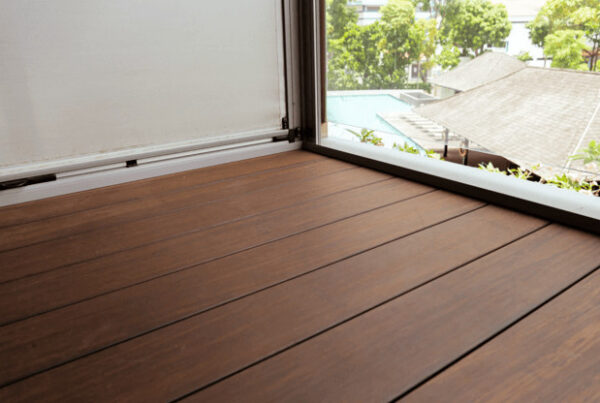
| Balcony | Hollow or lightweight solid boards | Weight limits, drainage for rainfall |
| Roof Terrace | Solid boards with strong UV resistance | Full sun exposure, wind loading, structural support |
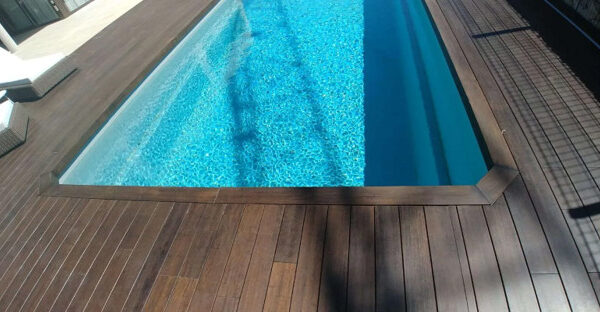
| Pool Deck | Solid boards with anti-slip finish | Water exposure, slip safety, chemical resistance |
| Garden Path | Hollow or mid-range solid boards | Ground-level installation, drainage, edge stability |
Each of these applications has its own installation demands, which is why the process itself deserves just as much attention as the product choice.
Also Read: Outdoor Flooring Trends 2026: The Best Options for Singapore Balconies, Patios and Decks
The WPC Decking Installation Process
Even the best WPC boards will underperform if the installation is not done correctly. Knowing what a proper installation involves helps you evaluate whether a contractor is cutting corners.
What a Professional Installation Looks Like
A properly executed WPC decking installation generally follows a consistent sequence of steps:
- Site Assessment and Measurement: Confirm drainage, structural capacity, and layout.
- Subframe or Joist Preparation: Ensure a level, stable base for the boards.
- Drainage Planning: Particularly important for balconies, roof terraces, and pool decks.
- Board-Fitting with Hidden Fixings: Keeps the surface free of visible screws.
- Edge Trims and Finishing Details: For a clean, completed look around the perimeter.
Skipping or rushing any of these steps is often where long-term issues, such as uneven boards or drainage problems, tend to originate.
Timeline, Preparation and What to Expect
Installation timelines vary depending on the size and complexity of the space, but the table below gives a general sense of what to expect.
| Project Size | Typical Timeline | Preparation Needed |
| Small balcony | One to 2 days | Clear the space, confirm access |
| Medium terrace or garden path | 2 to 4 days | Clear the space, confirm drainage points, arrange access |
| Large roof terrace or pool deck | 4 to 7 days | Structural assessment, drainage planning, extended access |
A few practical points are worth keeping in mind regardless of project size:
- Weather can affect scheduling, so buffer time is often built in
- Existing flooring may need to be removed first
- A final walkthrough confirms finishing and drainage before sign-off.
With the process and timeline in mind, the next step is finding a decking range and supplier that fits the way you actually use your outdoor space.
Floor Xpert’s Outdoor Decking Range
Floor Xpert carries zSNAP.DECK, a Spanish outdoor decking system built for Singapore’s conditions. The range comes in 2 variants:
| zSNAP.DECK:WPC | zSNAP.DECK:WOOD | |
| Material | Wood fibres and recycled plastic | Carbonised bamboo |
| Colours | Teka, Pecan, Mink, Inky | Ochre, Cacao, Ipe |
| Sourcing | Recycled materials | PEFC-certified forests |
| Key resistances | Fading, staining, scratching, mould, rot, cracking, splitting | Improved durability via carbonised heating technology |
| Safety | Insect-resistant, splinter-free | Splinter-free |
| Best suited for | Households with children or pets; high-traffic areas | Homeowners wanting a natural wood aesthetic with better longevity |
A few features set the system apart from standard WPC decking:
- Invisible Profile: Joint conceals the locking system while allowing water drainage.
- Screw-free Installation: A magnet system holds boards securely while allowing natural expansion and contraction.
- 100% Accessible: Boards removed and replaced using a single spatula.
- Aluminium Support Structure: Load stability and long-term resistance to warping.
zSNAP.DECK is also Green Label certified, confirming it meets environmental standards for materials and production.
Get a Free WPC Decking Quote from Floor Xpert
Choosing the right decking comes down to balancing cost, durability and how you actually use your outdoor space, and that’s far easier with a clear, itemised quote in hand. If you’re ready to give your balcony, terrace or pool deck a finish that’s built for Singapore weather, Floor Xpert can help you get there.
Book a free on-site consultation with Floor Xpert to walk through your space, compare board options in person, and receive a detailed quote covering supply, installation, and finishing.